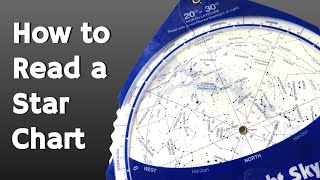
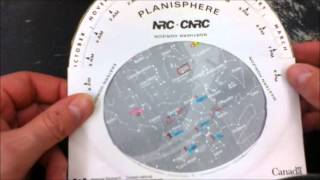
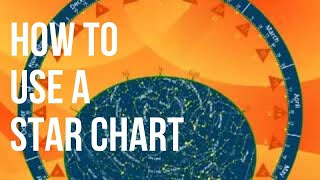
For anyone who has ever gazed up on a clear night and wondered which pinprick of light belongs to which constellation, a star chart is the most accessible tool. It translates the night sky’s complex layout into a simple, paper‑or‑screen map that lets beginners locate familiar patterns, plan observation sessions, and even learn basic navigation. With smartphone apps proliferating and backyard astronomy clubs gaining momentum, understanding how to choose and read a star chart has become a timely skill for curious newcomers.
Why a Star Chart Matters for New Stargazers

A well‑designed chart acts like a road map for the heavens. It highlights the brightest stars, outlines constellations, and often includes the Milky Way’s glow. For a beginner, the immediate benefit is confidence: you can point to Orion’s belt, locate the North Star, and track seasonal changes without endless trial and error. The chart also serves as a learning scaffold, reinforcing the naming conventions and magnitude scales that professional astronomers take for granted.
Typical Use Cases
- Weekend backyard viewing. A quick glance at the chart helps you set up a telescope or binoculars within minutes.
- Classroom astronomy. Teachers use simplified charts to illustrate the ecliptic, zodiac signs, and basic star‑formation concepts.
- Outdoor navigation. Hikers and campers rely on the North Star and major constellations to maintain orientation after dark.
- Amateur astrophotography. Knowing where bright stars sit speeds up composition and exposure planning.
Choosing the Right Chart: Paper vs. Digital vs. Hybrid

Not all charts are created equal, and the optimal format depends on where and how you intend to use it. Below are the three primary categories and what each brings to the table.
Selection Criteria
- Sky coverage. Local charts (e.g., “Northern Hemisphere Spring”) are compact, while all‑sky atlases offer year‑round reference.
- Magnitude limit. Charts that show stars down to magnitude 6.5 are sufficient for naked‑eye viewing; deeper limits suit telescopic work.
- Projection type. Gnomonic projections preserve straight‑line paths for navigation, whereas polar projections are easier for spotting circumpolar stars.
- Durability. Waterproof, tear‑resistant paper is ideal for field use; digital apps excel in portability but depend on battery life.
- Supplementary data. Inclusion of planetary positions, meteor‑shower peaks, or cultural mythology adds educational value.
How to Read a Beginner’s Star Chart
Even the most basic chart follows a consistent visual language. Mastering these symbols unlocks the sky’s layout in minutes.
Key Elements
- Stars. Dots of varying size represent apparent brightness; a legend usually correlates dot size to magnitude.
- Constellation lines. Thin lines connect the brightest stars to outline familiar shapes.
- Grid. Right‑ascension (RA) and declination (Dec) axes function like latitude and longitude for the celestial sphere.
- Special markers. A larger star indicates the North Star (Polaris) or other navigational anchors.
- Seasonal shading. Some charts shade regions visible at particular times of year, helping you plan observations.
Practical Reading Steps
- Identify your location’s latitude to gauge which constellations rise above the horizon.
- Match the current date to the chart’s seasonal indicator, then locate the corresponding RA strip.
- Find the brightest stars (largest dots) and trace the connecting lines to recognize the constellation.
- Use the magnitude key to decide whether a target is visible to the naked eye or will need optics.
- Mark any planets listed for that night; they often appear as distinct symbols beside the stars.
Putting It All Together: Real‑World Scenarios
Understanding a chart is only half the story; applying it in context turns theory into experience.
Scenario 1 – Family Camping Trip
Before setting up the tent, spread a waterproof paper chart on the ground. With a flashlight, locate Polaris and the Big Dipper; these serve as reliable points for orienting the campsite’s sleeping bags and fire pit.
Scenario 2 – Middle‑School Science Lesson
Teachers can project a digital chart onto a classroom screen, then have students use printable overlays to label Orion, Cassiopeia, and the Milky Way. This tactile activity reinforces spatial reasoning and astronomy vocabulary.
Scenario 3 – First Telescope Session
Bring a compact all‑sky chart alongside a low‑power spotting scope. Identify a magnitude‑2 star, such as Sirius, then follow the chart’s grid to locate a nearby nebula. The chart’s magnitude guide confirms whether the nebula will be visible without a larger aperture.
Quick Checklist for Beginners
- Pick a chart that matches your sky region and season.
- Verify that the magnitude limit aligns with your viewing method.
- Practice locating the North Star as a reference point.
- Use the grid to translate chart coordinates to your actual sky view.
- Keep a note of any special events—meteor showers or planetary oppositions—to maximize your night.
With these fundamentals in place, a star chart becomes more than a static image; it’s a dynamic companion that grows alongside your curiosity. Whether you’re stepping outside for a quick glance at Orion or planning a semester‑long astrophotography project, the right chart and a clear reading strategy make the night sky feel both accessible and endlessly rewarding.
Star PNG Transparent Star.PNG Images. | PlusPNG

Star PNG Transparent Star.PNG Images. | PlusPNG
Video Star Logo Png At Jorge Holyfield Blog

Video Star Logo Png at Jorge Holyfield blog
Ouro Estrela Símbolo 19617676 PNG

ouro Estrela símbolo 19617676 PNG